On the dangers of ‘reverse essentialism’

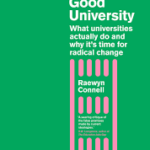
While Southern Theory continues to grow, there is a danger that it develops insulated from critique. There is the risk that its political mission focuses exclusively on distinguishing a separate form of knowledge from the dominant north, repeating the kind of denial of southern roots prevalent in the North.  

A recent article by Gregor McLennan from University of Bristol offers a critical appreciation of Southern Theory:

Sociology is often pitched as the social science discipline most obviously in need of postcolonial deconstruction, owing to its ostensibly more transparent Eurocentrism as a formation. For this reason, even postcolonial scholars working within the ambit of sociology are reluctant to play up its analytical strengths in addition to exposing its ideological deficits. Without underestimating the profound impact of the growing body of postcolonial theorizing and research on self-reflexivity within sociology, this paper points up some key ways in which the structure of comprehension within postcolonial critique itself is characteristically sociological. Alternatively, if that latter conclusion is to remain in dispute, a number of core epistemological and socio-theoretical problems must be accepted as being, still, radically unresolved. Consequently, a more dialectical grasp of sociology’s role within this domain of enquiry and style of intellectual politics is needed. I develop these considerations by critically engaging with three recent currents of postcolonial critique – Raewyn Connell’s advocacy of “Southern Theory”; the project of “reinventing social emancipation” articulated by Boaventura de Sousa Santos; and the “de-colonial option” fronted by Walter D. Mignolo.

He cites Santos’ caution against a simplistic North-South binary:

[Santos'] accepts that the register of South versus North, East versus West is a metaphorical one that, while effective as a ‘‘defamiliarizing’’ tactic, runs the risk of a sloppy reverse essentialism in which Europe and its traditions are treated as a ‘‘monolithic entity’’.

We are left with a challenging question. If we accept that the North-South division is indeed a generalisation, then what is its remaining meaning? It is possible to lay a similar charge with many oppositions, such as male-female, human-nature and capital-labour. The criticism doesn’t invalidate the opposition, but does caution against an essentialist reading of geopolitics. The opposition needs to be understood as a ongoing construction that is critically relevant to cultural trajectories, rather than something that occurs automatically when we cross the equator.

Reference

Gregor McLennan (2013), Postcolonial Critique: The Necessity of Sociology, in Julian Go (ed.) Postcolonial Sociology (Political Power and Social Theory, Volume 24), Emerald Group Publishing Limited, pp.119-144

The proposal to legalise drugs in South America

Security is one of the most important topics in International Studies. This concept is not always related to the North, the South has had its own threats too: throughout 19th and 20th centuries there have been Western empires, ideological battles and US interventions. But today, in South America, the main threat is drug trafficking and its roots are in economic globalization.

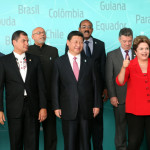
Free trade around the world is one of the most important long term economic trends and the exploitation of the free trade by emerging powers is an important short term trend. In this way, regions around the world have been impacted by new world economic powers like China. The Chinese demand of commodities around the world has resulted in high international prices and lucrative imports from countries like Chile, Peru and Brazil.

Together with China, Brazil has been very important in South America (in spite of its low growth throughout 2012) especially for countries like Bolivia or Paraguay, two landlocked states, where the main export to the Brazilian market is energy.

Thus, most of South American economies are growing around 4%[1] and during last decade poverty has decreased, even in Bolivia, the poorest regional country;[2] this is mainly because government efforts in this period have been focused on keeping macroeconomic responsibility plus implementation of social programs. Nonetheless, there are two main economic menaces in the region: first, most of South American countries are relying on China’s economy success, which in turn will not be forever. Second, if Brazil keeps its economy dependent on a bumpy Europe, and if the called “Brazil Cost”[3] continues without solution, most of its neighbours will suffer some consequences in the future[4].

In this context, most important security challenge in the region is drug trafficking and the first goal of defence policies is in human security. In order to overcome these issues countries are developing their own military actions: Democratic Security Policy (Colombia), “Ágata” Military Operations (between Brazil, Bolivia and Peru), “BOLBRA” war games (Bolivia and Brazil), or the New National Security Strategy and Defence of Chile whose main theatre of operations is Arica, region located in the border with Peru and Bolivia.

To understand this regional security challenge, first we have to highlight two of its main causes. First, despite the regional economic growth and social programs there are a huge social inequality and a strong social feeling of injustice (let’s remember student’s riots in Chile during 2011), many disadvantaged people choose alternative ways to realise social progress through gang activities. This happens in Rio do Janeiro (Brazil), Ciudad del Este (Paraguay), VRAEM (Peru), La Legua (Chile), and so on. It is certainly true that South American social problems could be worst if emerging powers cannot maintain its economy growth in the future.

Second, the economic growth and social programs in countries like Chile or Brazil have resulted in a huge middle class with capacity to consumption and, therefore, drugs traffickers have new markets to sell cocaine, besides its traditional big markets such as the United States and Western Europe. Clear example of this is the power gained by gang Primero Comando da Capital in Sao Paulo, which traffics from Paulist jails to the Brazilian market. In this sense, it is very important for Brazilian authorities to keep the control over international borders, because these gangs make business with cocaine dealers from Bolivia or Peru.

Without doubt, the situation is more complex when gang activities are connected to terrorist groups or irregular armies like the FARC. In this case the Colombian government has made enormous military and political efforts in order to combat this organization; actually today there is hope on Colombian peace negotiations lead by President Santos, because the end of war in Colombia could be the end of the main “narco-guerrilla”.

The Colombian case is especially worrying due to the guerrilla’s war impacts on Venezuela and Ecuador[5], two countries known by their difficult borders. According to the UNODC (2012) Venezuela has become the main port for Colombian cocaine to transatlantic routes, and Ecuador has become an important transit place too.

There is not easy solution to this kind of regional challenge, because drug trafficking and social inequalities are the first link in an intricate chain connecting Central America and Mexico, where transnational criminal gangs have got a dangerous power. On the other hand, South American countries are not the primarily responsible or, at least they are not only responsible of drug trafficking, because the primarily cocaine consumers are in the West.

In other words, this problem seems to be a transnational issue, and in this sense, one alternative would be legalizing the cocaine trafficking in order to dismiss criminal gangs, to get secure cocaine markets and better statistics of cocaine consumers. But this kind of solution would require big cultural and institutional changes.

For instance, in Uruguay President José Mujica has recently proposed to legalize marijuana consumption and to educate people about this issue, but this proposal will not be able to become law while conservative groups have influence over popular opinion, especially the Catholic Church and right wing parties. In fact, Mujica recognized later that society is not yet ready to this kind of measures.

Another important step has been Bolivian experience during Evo Morales presidency, because his administration recognizes coca leaf farmer rights and coca cultural values. Bolivian policies on coca leaf represent a deep change of mentality since DEA interventions in the country two decades ago, when coca leaf activities were synonymous of crime. But at the same time, the new Bolivian institutional model has not meant the end or decrease of illegal coca leaf planting.

Both Uruguay and Bolivia cases show that, at least, the legalization debate has started. In this sense, maybe the most important signal of a new time has been the Global Commission on Drug Policy, where much respected intellectuals and politicians were able to participate, such as Mario Vargas Llosa, Fernando Enrique Cardoso, César Gaviria, Ernesto Zedillo, Kofi Annan, Paul Volcker and George P. Schultz. In its report (2011) the Commission proposed to create new institutional models around the world in order to legalize drugs. The main argument for this proposal is the failure of drug policies during last fifty years, especially the war against drugs launched by President Nixon; together with this, the commission stated the importance to pay more attention to health programs instead of military policies[6].

Notwithstanding this, all these signals are not enough to take seriously an international legalization model and certainly they are not enough to overcome current military policies as key actions to combat drugs trafficking.

Claudio Coloma is an academic at the University of Santiago of Chile

Notes


[1] IMF-Western Hemisphere Department. Regional Economic Outlook. Washington, D.C. October 2012.

[2] Weisbrot, Mark, Rebecca Ray and Jake Johnston. Bolivia: The Economy During the Morales Administration. Center for Economic and Policy Research. Washington, D.C. December 2009.

[3] Combination of bureaucratic hurdles, complex taxes and insufficient infrastructure. Glickhouse, Rachel. Rousseff Takes on the Infamous “Brazil Cost”. AS/COA. May 22, 2012.

[4] According to IMF “low growth and uncertainty in advanced economies are affecting emerging market and developing economies”. Emerging powers such as China and Brazil are reliant on developed countries, especially USA and UE. IMF. World Economic Outlook. Washington, D.C. October 2012.

[5] IISS. The FARC Files: Venezuela, Ecuador and the Secret Archive of ´Raúl Reyes`. London. 2011.

[6] Informe de la Comisión Global de Políticas de Drogas, junio de 2011, www.globalcommissiondrugs.org

In 2008, Paraguayan author predicted and described the Pope’s resignation

Life, at times, imitates art.

In the novel, “The Apocalypse of Benedict” (El Apocalipsis según Benedicto) published in 2008, prize-winning Paraguayan author, Esteban Bedoya, accurately describes the Pope’s retirement at the age of 85. Incredibly, one paragraph of Bedoya’s novel reappeared 2 years later in 2010, when Benedict XVI, in an interview (which was later published as a book) with a German journalist, expressed a possible condition for his retirement. At the end of Bedoya’s short novel, after his retirement, the ex-Pope was continued to be called “Benedict”.

In the first part, with an admirable writing style that is both precise and surgical, Bedoya tells a story, very similar to reality, of the public life of Benedict XVI, whose full name is Joseph Aloisius Ratzinger, who after the death of John Paul II, was elected as the 265th Pope on the 19th May, 2005.

In the second part, Bedoya unleashes his creativity and, amongst other events, Benedict XVI resigns. What follows, is a recommendation for anyone who has yet to read the book: to get themselves a copy and read it.

But it’s not just by coincidence or chance that Bedoya is lead to such an accurate prediction. It is however, the development of the novel that drives and justifies this outcome.

The resignation and retirement of the Pope, detailed in Bedoya’s fiction, is now seen today repeated in reality and has taken many by surprise. Accordingly, use of this fiction should be highlighted as an effective method to interpret and explain what really occurs in the dark, yet elaborate corridors of the Vatican.

One of the extracts from the novel that accurately describes certain sentiments and reasons for retirement which have since been publicly expressed by Benedict XVI himself, years after Bedoya’s novel had been published, includes:

The press speculated and started rumours which spoke of the retirement of the Pope: Benedict himself had announced his intention to resign in the case of being unable to carry out such responsibility (“The Apocalypse of Benedict”, page 21).

Benedict’s sentiment in Bedoya’s 2008 novel, fits perfectly with the paragraph highlighted by the Basque newspaper, GARA, on 12th February 2013 which reads:

The protagonist himself (Joseph Ratzinger), in a book-length interview with German journalist Peter Seewald, confessed in November of 2010 his willingness to “resign due to illness, if physically, psychologically and spiritually (he) were not able to perform (his) job (in: http://preview.tinyurl.com/cy9az8y).

The idea is not to take away potential readers of the novel, so in it, after the resignation, the former Pope was continued to be referred to as Benedict…

In light of this, Cubadebate published the article: “Lombardi: We will continue to call him Benedict XVI” (in: http://tinyurl.com/bu7vd4r).

It’s worth highlighting the film “Habemus Papam”, by Italian film director Nani Moretti, which tells the fictional story of Cardinal Melville, who, when elected Pope, suffers a panic attack that prevents him from taking office. However, in the case of the Bedoya’s novel, both the identity and age of the Pope who decided to retire is actually depicted: the same Joseph Ratzinger – Benedict XVI, at age 85.

To think that a Pope can retire is not something extraordinary, even though the last time it happened was 598 years ago, but to actually predict the name and age of the Pope who has now, in real life, resigned and retired…. well that’s a different story.

In turn, author Frei Betto has so far written about five resignations, including that of Benedict XVI:

In the history of the Church there are four popes who resigned …: Benedict IX (01/05/1045), Gregory VI (20/12/1046), Celestine V (13/12/1294) and Gregory XII (04/07/1415). Benedict XVI will be the fifth, as of 28 February 2013 (in: http://tinyurl.com/bfdyls2).

Literature is also capable of writing the history of the future

In delving into universal literature and cases of authors who produced works considered clairvoyant, emerge the names of Jules Verne, H. G. Wells, George Orwell, Ray Bradbury and Manuel Scorza.

Julio Venre was a successful French writer thanks to his ability to attract a very diverse readership. He captivated audiences by pioneering the science fiction genre and his works were not only popular in his time, but even still today.

He predicted with great accuracy in his fantastic tales the appearance of some of the products generated by the technological advances of the twentieth century; TV, helicopters, submarines and spaceships (in: http://tinyurl.com/ylmn3om).

Herbert George Wells was a writer, novelist, historian and British philosopher. Wells wrote science fiction novels such as “The Time Machine” (1895), whose original title was “The Chronic Argonauts”, “The Invisible Man” (1897), “The War of the Worlds” (1898) and “The First Men in the Moon “(1901).

George Orwell, under the pseudonym of Eric Blair, was a British writer, and wrote the novel “1984″ in 1948. Perhaps this title arose as a rearrangement of the last digits of the year to place the work in the future. It is often cited as a counterexample to a utopia (an imagined place in which everything is perfect), with “dystopian fiction” (an imagined place in which everything is undesirable). In this book the concept of “Big Brother” emerges; a police state which is totalitarian, vigilant and repressive, as it used to be three decades ago, due to results of projects like “ECHELON” (UKUSA Security Agreement: United States, UK, Canada, Australia and New Zealand).

Ray Douglas Bradbury, American science fiction writer, wrote fantasy stories with a poetic prose such as; “The Martian Chronicles” (1950), “The Golden Apples of the Sun” (1953), “A Medicine for Melancholy” (1960), “The Machineries of Joy” (1964) “Ghosts of the New” (1969), and among his novels, the unforgettable “Fahrenheit 451″ (1953), is also highlighted as part of his dystopian fiction.

Manuel Scorza, excellent writer, poet and social activist from Peru, wrote the monumental epic series “The Silent War”, composed of five novels: “Drums for Rancas” (1970); “Garabombo, the Invisible” (1972), “The Sleepless Rider “(1976), “The Ballard of Agapito Robles”(1976) and “Requiem for a Lightning Bolt” (1978). In the latest of the series, Scorza wrote about certain characters and their actions which, two years later, came true in a few sociopolitical cases in Peru.

However, in the case of “The Apocalypse of Benedict” Esteban Bedoya went a step further, venturing into unchartered territory and creating a piece of literature which, five years ago, described with amazing accuracy something that then was the future and today is now the present.

International recognition of Bedoya’s nouvelle format

In some proposals for the classification of novel literary works nouvelle or novella is a story of a lesser extent than a novel and is defined by Julio Cortázar as a “genre somewhere between a story and a novel.”

With respect to the number of words in a nouvelle, some authors set their limits between 30,000 and 50,000 words, but it is not an inflexible rule. Two nouvelle works are: “The Tracker” by Julio Cortázar and “Perjury in Snow” by Adolfo Bioy Casares.

This extension which responds to the nouvelle format is apparently where Esteban Bedoya is most comfortable. “The Apocalypse of Benedict” in its Spanish version has 13,389 words and in English, 14,756. His excellent nouvelle will be republished under the title of “The Ear Collector” and in its Spanish version will be 35,914 words.

The novel “The Apocalypse of Benedict” is not limited to the accuracy of the story and guessing what happens now in 2013, it has outstanding literary merit pertaining to both the structure and the level of creativity. In fact, for this work Bedoya received the 2010 PEN America/Edward and Lily Tuck Prize for Paraguayan Literature.

As a writer, Bedoya has also received awards from the Academy of American Poets (1982) and publisher, Helguero (1983).

His much publicized novel “The Bear Pit” (2003), was translated into French under the title “La fosse aux Ours” (2005), the German title “Der Bärengraben” (2009) and published in France by La dernière Goutte.

His novel “The Evil Ones” (“Les Mal-aimés”) (2006) was translated and published in France as by L’Haremattan and the novel, now titled “The Ear Collector” will be translated into French and published in France by La dernière Goutte.

“The Apocalypse of Benedict” is being translated into English for publication in the United States.

After ten years of his creative work being published, Esteban Bedoya’s writing continues to increase in creativity, with genuine stories that are not only worthwhile reads, but are enjoyed with the same pleasure as that of the best of Augusto Roa Bastos.

Article by Vicente Brunetti from Kaos en la Red (translated by Gabrielle Hall).

DIFFERENCE AND REPETITION: REFLECTIONS ON THE CURRENT SOUTH AFRICAN MOMENT by Achille Mbembe

Commenting on the South African predicament in a recent opinion piece in The Mail and Guardian, Mbembe wrote: “A planetary recoding of situations of misery, debt and enforced idleness is underway. Today, black people are still paying the price of yesterday’s racial discounts, without which white privilege would have been but a mirage. The next decade will see increasing conflict between market forces and democracy, between the rule of property and the rule of the poor. The capacity of the South African State to mediate between the rights of the propertyless and the requirements of capital accumulation will be severely tested”. In this lecture, Mbembe will reflect on the current South African political moment. He will also assess the crisis of culture which afflicts South Africa’s democracy and the extent to which contemporary struggles for emancipation truly transcend the law of repetition which Frantz Fanon foresaw as the biggest threat to difference and newness.

Achille MBEMBE is a Research Professor in History and Politics at WiSER and a Visiting Professor in the Romance Studies Department and The Franklin Humanities Institute at Duke University. He is a co-Convenor of The Johannesburg Workshop in Theory and Criticism (JWTC) and the Editor of the digital cultural magazine The Johannesburg Salon. He is the author of numerous books in French and is mostly known in the English-speaking world for his classic, On the Postcolony (Bil, Venter/Altron Award, 2005). His latest book, Sortir de la grande nuit (Editions La Decouverte, Paris, 2010) has sold more than 10,000 copies and will be published by Columbia University Press in 2013.

Thursday, 14th March 2013
6:00-7:30pm
WISER Seminar Room, 6th Floor, Richard Ward Building,
East Campus, Wits University

Refreshments will be served

Please RSVP to Najibha.Deshmukh@wits.ac.za

Honouring Jorge Amado in today’s Brazil

Exhibition curator and academic Ilana Goldstein describes her exhibition about the life of one of Brazil’s leading writers, Jorge Amado. According to Amado, “We did not want to be modernists but modern.”

A video glimpse of the exhibition “Jorge Amado and the Universal’

Jorge Amado (1912 – 2001) was one of the the most well-known Brazilian authors – in Brazil and abroad. Most part of his 33 books are translated into 49 languages and he has been adapted many times to soap-operas (television), films (cinema), theatre plays and cartoon.

Some scholars and critics from São Paulo and Rio de Janeiro have been sceptical about Amado, saying that his literature is too popular, too easy to read. But despite his apparently funny and easy style, his novels are well constructed, he was a very cultivated person (friends with Picasso, Neruda and Sartre, for example) and really concerned with national problems and issues – which underlie his fiction.

The exhibition was a celebration of the 100h Birthday of Jorge Amado. It was on in São Paulo untill the end of June and then toured to Salvador, Bahia, maybe Recife, Frankfurt and probably other cities, not yet confirmed. The show is sponsored by Santander bank, using the Lei Rouanet, a federal law which allows sponsors to pay less Income Tax (saving almost the same amount given to the cultural project).

The rooms of the show

1. The tile wall in the entrance

Getting out of the lift, the visitor will see a big tile wall. It has two senses. First of all, it alludes to the traditional architecture of Salvador. Old colonial buildings are traditionally decorated with blue-and-white tiles. The houses of Jorge Amado and all his friends (artists, writers from Bahia) in Salvador are also decorated with tiles, but replacing the traditional Portuguese drawings by sentences and quotes carefully chosen, that welcome guests.

The second reason of the wall to be in the entrance of the show is to suggest that the public leave behind all its prejudices and all television images linked to Jorge Amado. The surprise effect is obtained through the reading of the sentences, which deal with history, the mission of the artist, ethics, universal questions. The quotes are not signed, so that for some seconds the person asks himself/herself: am I in the correct floor? “Are these sentences really from Jorge Amado? They have nothing to do with the clichés I have always had from him…”.

2. Characters room

The first room is devoted to Amado´s characters. Nine LCD screens show 3 minute-films about nine selected books and its main characters. The names of these chosen characters are written in the wooden walls around the room. But this is just an “appetizer”, for Jorge Amado has created more than 5.000 characters! Our way to represent that huge universe was writing the names of other 200 characters in the colourful back wall of the room. The small ribbons remind the typical souvenir from Bahia: “fitinhas do Bonfim”.

The scenography of this room and of the rest of the exhibition is composed by urban “ready-made” objects: washbowls, market boxes, book shelves etc. Nothing is fake, little was fabricated for the show. They remind the popular and collective daily life of Bahia, which was the main source of inspiration for Jorge Amado. The scenographical choice has a reason. The writer said he didn´t make up things: he used to write about people he had known and situations he had experienced in the streets of Bahia, of course adding imagination and poetry to them.

3. Politics room

In the 1930s, 1940s and 1950s Jorge Amado was very engaged in left-wing politics. He became a member of the Brazilian Communist Party (PCB), he travelled to many socialist countries in East Europe, and he was even elected as a congressman in 1946. As a congressman, he proposed two very important legislative changes: one in the the Copy Right Act and the other in the Religion Act. He was responsible for approving the cult freedom in Brazil. Even if he was an atheist himself, cultural diversity was very precious for him. He had seen Afro-Brazilian temples being invaded and destroyed by the police in his youth and that really touched him.

During 25 years, Amado´s fiction was influenced by his political concerns. Strikes, poverty, hunger are common elements of the books in this moment. Amado has also published a lot of newspaper articles in this period, working as a journalist and as an editor. This fact explains the scenography of the room.

But in 1954 he found out all the crimes committed by Stalin. At the same time, he was tired of the rules the Party imposed to communist writers. So, he decided to get out of the Communist Party and to devote himself exclusively to his literature. The first book of this second period of his work and life is Gabriela, Clove and Cinnamon, published in 1958. His fiction changes a lot then, becoming funnier and lighter. Gabriela receives many prizes and sells very quickly.

4. Mixtures and blends

The third room of the show deals with the cultural mixture characteristic of Brazilian society. In the United States, for example, people classify themselves as blacks or whites. But in Brazil the identification process is much more complex. First of all, people don´t think about races, they think about colours. And they don´t think in a dualistic way. In 1976, the government let the question “What is your colour?” open in the census. The result was a list with 136 different answers, comprising from “dirty white” to “light black”, from “sun tanned” to “pale”, from “green” to “blue”. This funny and impressive list is reproduced in one of the room walls. Jorge Amado was very sensitive about this Brazilian feature and in his novels we have found dozens of different manners of describing the colour of the characters as well – which are reproduced in the opposite wall.

A second important element in this room is the religious syncretism, represented by the various religious elements coming from Afro-Brazilian cults as Candomblé and Umbanda, but also from Catholicism, Judaism and Islamism. In Amado´s books, some characters combine different beliefs and all these religions appear in a respectful way. It was another way for the writer to spread his message of tolerance and cultural exchange.

5. Sex and tricks

Love, sex, prostitution and sometimes pornography or sexual violence are frequent elements in Amado´s fiction, specially after Gabriela (1958). It is a way to celebrate the pleasures of life but also to talk about social relations in another manner.

The neon lights in this room contain names of brothels that appear in Amado´s novels. Brothels were central institutions in Brazilian society in the 1rst half of the XXth century. Housewives were shy and repressed. Men were almost authorized to visit whorehouses – including Amado´s father, uncle and the writer himself. Men made business, discussed arts and decided politics in these places. Extracts from Amado´s book dealing with these subjects are shown inside the light boxes.

A second subject present in this room is the “jeitinho brasileiro”, or “the Brazilian way”. Since colonial times, as the historian Sérgio Buarque de Holanda has already written in 1936, Brazilian tend to erase the limits between public and private spheres, avoiding to follow rules, using the law only when it seems interesting, asking personal favours instead of achieving formal rights. On one hand this brings much flexibility to our society. On the other other hand, it is dangerous for the development of the country, because everything that is official and formal tends to be disdained and only what is connected to friendship and affection seems to be desirable. Some of the texts in the light boxes bring parts of Amado´s books that translate this “Brazilian way”.

6. Bahia square

This is the last and biggest space of the exhibition. Some of its highlights are:

  • The photographic wall with pictures of Bahia, displaying its beautiful side (nature, food, street parties) and its sad aspects as well (poverty, architectural destruction, dirty).
  • The bottle wall, containing Dendê oil in dozens of plastic bottles. Dendê oil is a central ingredient in Bahia´s recipes, very appreciated by Jorge Amado. At the same time, the disposal of so many bottles allude to the sea, very important in Amado´s novels. Amado´s sentences describing the sea are glued on the bottles´surfaces.
  • The cacao seeds walls, where the LCD screens are. They allude to Amado´s childhood in the south of Bahia. His father was a pioneer cacao farmer in the first years of the XXth century.
  • The “Jorges” room, separated from the rest, where hundreds of biographical documents are hanging, from family pictures to passports and diplomas, from book covers to letters sent to him by other writers.
  • The artworks wall, where original prints from three Brazilian artists are displayed: Renina Katz, Calasans Neto and Carybé. All three have translated the literature of Jorge Amado into the visual arts.

After all, one of the impressions we think the exhibition will leave is the mutual relation between representations and reality: Bahia/Brazil has become similar to Jorge Amado’s portrait and, at the same time, the writer looked and acted like one of his characters.

Warning: Questions Ahead! Southern dialogues at the beginning of 2013

Southern dialogues are developing strongly at this moment in time, though only to highlight the significant challenges ahead.

The colloquium Diálogo Trans-Pacífico y Sur-Sur: Perspectivas Alternativas a la Cultura y Pensamiento Eurocéntrico y Noroccidental took place on 8-9 January, as part of the grand scale Congreso Interdisciplinario at University of Santiago, Chile. Latin America has been the home of particularly active southern thinking, inspired often by its indigenous cultures. The ‘south’ as a rallying call has been significant given the tangible counter-influence of the United States, to the immediate north.

The Santiago colloquium witnessed a change away from this previously combative north-south argument. The principal perspectives were from Chile, México and Argentina. Much discussion was given to the emerging relations with Asia, specifically China. Alongside this was the growing influence of Brazil across Latin America, reflected in the large number present for the parent congress. In the past, these south-south relations would have been flavoured by a solidarity against USA as the common hegemon. But now there is increasing recognition of a diversity of interests across the south, and the need to reflect this in a conversation which is not reduced to catching up with the North.

One tangible contribution of the colloquium was the title. The word ‘noroccidental’ literally means ‘north-western’. This refers more generally to Western culture in the North, rather than the top left corner of the globe. Such a term accepts that there is a Western culture in the South as well, particularly in countries like South Africa, Australia and Chile. But it differentiates itself from other northern countries, such as Russia and China.

Other emerging terms are ‘Euro-American’ and ‘trans-Atlantic’. The problem with these is that it uses the generic term to represent only one half—North America. ‘Euro-American’ does not include Latin America, nor does ‘trans-Atlantic’ feature exchanges with Africa. The challenge is to find an English equivalent of ‘noroccidental’. Would ‘north-Occidental’ do?

The plenary concluded with a call for a more global understanding of South, reflecting such developments as population flows through the North and the relational identity of North and South.

The challenge is to extend this dialogue beyond Latin America to engage with forums elsewhere in the South. There is much activity in South Africa at the moment around the book by Jean & John L. Comaroff, Theory from the South: Or, how Euro-America is Evolving Toward Africa, including the recent critical responses in Johannesburg Salon. In Australia, there is continuing reference to Raewyn Connell’s Southern Theory, as well as Indigenous Studies broadly taking on global themes.

The relative lack of connection between these dialogues is, of course, reflective of the condition of the South itself, as a series of spokes connected with each other only via a central hub in the North. Language is an added challenge. The convenor of the Congreso Interdisciplinario Eduardo Devés has developed his own perspective on the Southern condition through ‘periphery theory’, outlined in his publication Pensamiento Periférico, which is freely available in Spanish. The potential reduction of South to the condition of periphery is an important challenge to the broader historical narratives that it carries. To what extent the issues normally identified with South be characterised by the condition of distance from the centre? Such a perspective puts the historical conditions such as settler-colonialism into question.

Though the distances between the southern countries themselves should be identical to those separating northern countries, the ‘hub & spokes’ model works in a very practical way to mitigate against south-south travel. Many academics from outside Chile had to cancel their involvement in the colloquium due to higher than expected air fares. This is obviously compounded by smaller travel budgets for academic staff in southern universities.

The view looking out of University of Santiago, flanked by Allende and Guevara

The view looking out of University of Santiago, flanked by Allende and Guevara

Nevertheless, the University of Santiago is taking a lead in fostering south-south dialogue. In late October 2013, they will initiate an annual forum/workshop to ‘go full circle’ on the Pacific, looking at how a trans-Pacific exchange might be configured to include Latin America. The Asia Pacific is usually conceived as a domain exclusive to Australasia, East Asia and North America. But as with the APEC forum, the south-east arc of Latin America should be an integral part of that. ‘Full circle’ provides a focus on the Pacific as a space for multilateral relations. What would be the intellectual underpinning of this?

The time seems ripe for a major conference on these various strands of southern thinking. Given its position, hosting an international conference would seem one tangible contribution that Australia could make to this emerging paradigm. Alternatively, if it were to be held in a northern university, this paradox of having to go North to talk about South would provide sufficient material for a conference in itself.

One question that tangibly brings the condition of southern thinking home concerns the north-south asymmetry of the academic world. In particular, if someone had the prospect of an academic position in Europe or North America, would there be any value in remaining in a less well-endowed southern university?

Meanwhile, while waiting for such an event to emerge, four Australian academics have generous offered a summary of their work accompanied by a generative question:

As the Zapatistas would say, inspired by Mayan mythology, ‘walking we ask questions’. Thankfully, the path stretches out ahead.

What is the role of geography in sociopolitics?

Lorenzo Veracini

Senior Research Fellow, Swinburne University, Melbourne

‘North’ and ‘South’ are simultaneously geographical and sociopolitical categories. Colonialism – a hierarchical relationship that is premised on the superordination of a metropole that is premised on the subordination of a periphery – is fundamentally involved in both dialectics: in the first case, because it is premised on a distinction that only geographical displacement makes possible; in the second case, because it is a relationship – it defines self and other as it embeds them in an inherently unequal relationship.

Settler colonialism – a particular form of colonialism where the colonisers “come to stay” and are founders of political orders that are endowed with a specific self-constituent sovereign capacity – is a manipulation of both these categories and their ordering; this is why it should feature in any South-South dialogue.

Geographically, settler colonialism is premised on a displacement that is ultimately a non-displacement. Settlers transform geography and a capacity to do so is a measure of their success. As well as founders of political orders, therefore, they are destroyers of ecological ones (and therefore builders of new landscapes). Indeed, it is exactly because they are able to destroy existing ecosystems that they are so effective at establishing durable political regimes. As they consume places at a fierce rate and routinely dissolve distance, they Europeanise space. No wonder that the old term for settler colonialism was ‘planting’; their countries look like the ones they have left behind.

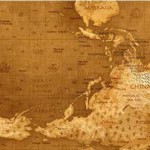
Of course settlers need to manipulate the terms of geographical representation as well. Wakefield’s imaginary goodbye to his grandmother is a case in point. As she mentioned how far New Zealand was, he tore the map, connected the opposed margins, and turned it upside down to place the settler colony to be at the centre of his representational system. James Vetch’s 1838 Map of Australia, another geographically imaginative act of settler colonial evocation, showed Spain and Portugal tucked in at the bottom.

This notion, however, is much older and Jean-Pierre Purry, colonial adventurer and serial promoter of (failed) settlements, tried to establish colonies in Australia, South Africa and North America because he assumed in an act of geographical speculation (he was a compulsive speculator) that colonisation – the reproduction of a self-supporting and virtuous sociopolitical bodies – would only be successful at around 33 degrees latitude, the latitude of biblical Canaan. These are all examples of decentering acts of geographical manipulation that envisage a north in the south.

Sociopolitically, settler colonialism also turns the metropole-periphery opposition upside down. This is why we can talk about a settler “revolution”. Settler colonialism establishes immediately autonomous sociopolitical bodies that, in the future, will be entirely independent of the ties that bind it to an originating locale. Settler colonialism is thus colonialism without permanent external subordination (settler control of indigenous alterities is not exactly external – that is why the notion of internal colonialism emerges in settler colonial contexts and is eventually reimported to Europe). Settler colonialism produces islands of autonomously colonising ‘North’ in the global ‘South’.

Question

How do we narrate the lack of exact fit between geography and sociopolitics when we approach the North-South divide (beside settler colonialism, the topic of my intervention, isn’t there plenty of ‘North’ in the ‘South’ and even much more ‘South’ in the ‘North’)?

¿Cómo narrar la falta de ajuste exacto entre la geografía y sociopolítica cuando nos acercamos a la división Norte-Sur (al lado de colonialismo, el tema de mi intervención, ¿no hay un montón de “Norte” en el “Sur”, y más aún mucho ‘Sur’ en el ‘Norte’)?

A statement and question offered to participants of the symposium Diálogo Trans-Pacífico y Sur-Sur: Perspectivas Alternativas a la Cultura y Pensamiento Eurocéntrico y Noroccidental, University of Santiago, 8-9 January 2013

How to move with honour between laws of the south?

Shaun McVeigh

Associate Professor, Law School, University of Melbourne

I welcome the opportunities that this congress creates to discuss and reflect on many of the relationships formed across the South.

For many Australia is viewed politically, juridically and economically as an outpost of the North. The Australian state has done little to alter the colonial forms of belief and government by which Australia was established as a sovereign nation. It continues the expropriation of the life, land, and laws of the South. However, there are also many involved in assisting Australia take up its place again as a pacific nation of the South, a nation able to live with justly with its own laws and one capable of honouring the laws of the Indigenous and non-indigenous peoples of the South. At the centre of this lies a concern with the conduct of lawful relations. For the non-Indigenous peoples of Australia and elsewhere who live by laws inherited from the North it is necessary to think again about what it means to live lawfully and to honour laws. Only one part of this will be concerned with human duties and human rights.

At present as a jurist and jurisprudent I am involved in two projects engaging a lawful South. One, with Kevin Murray, involves developing ways in which designers from Australia might engage with artisans and crafts people of the south in ways that create honourable relations of exchange and trade. Another, with Sundhya Pahuja, involves maintaining international law as a meeting places of laws rather than as an administrative domain of the North.

Question

How do we conduct ourselves with honour as we move within and between the laws of the South?

¿Cómo nos comportamos con honor como nos movemos dentro y entre las leyes del Sur?

A statement and question offered to participants of the symposium Diálogo Trans-Pacífico y Sur-Sur: Perspectivas Alternativas a la Cultura y Pensamiento Eurocéntrico y Noroccidental, University of Santiago, 8-9 January 2013

Who are your moral heroes?

Christine Black

Adjunct Senior Research Fellow, Griffith Center for Coastal Management, Griffith University, Brisbane

Greetings from Dr Christine Black

I have been asked to contribute to this conference through this intermediary of writing a few paragraphs to convey a message from Australia. As an Indigenous woman of the Kombumerri and Munaljahalai peoples I want to first acknowledge the spirits of your lands and those who have come before you and those who will come after you. Your continent is a powerful and vast land that has experienced continuous invasion like no other continent on this earth. And yet it prevails and gives your people life. We should all be thankful for what the land we walk upon each day gives to us personally. Furthermore your Indigenous Peoples have survived through all these invasions and have preserved and protected the ancient knowledge of your lands. To preserve a culture and law takes strength and moral fortitude. It is not preserved by technology but relationships, relationships between humans and their beloved land. Land teaches people how to live on it, and to understand the law of a land takes thousands of years of caring for land.

Australia has a unique responsibility to the world. That responsibility is to must preserve and perpetuate the oldest continuous culture and law in the world. This is a great honor bestowed upon Australians by providence.

It has also been my personal responsibility to continue and share that ancient knowledge and law. I have carried out this responsibility by writing a book on Indigenous legal theory entitled The Land is the Source of the Law: A Dialogic Encounter of an Indigenous Jurisprudence. (Routledge). This book is made up of many stories of how the law of sharing and caring is the most important moral compass a peoples can live by. That caring begins with caring for the Land and environment. The book is not just meant for academics, as the knowledge of our Senior Law People is for everyone to learn how important it is to understand that lawful behaviour comes from caring for Land and not just ourselves.

Question

I have also been asked to pose a question to the participants. I would therefore ask; who, in your opinion has demonstrated moral courage which others of the South could learn from? In other words who are your heroes and how can citizens of other nations in the South learn from their exemplar moral behavior.

¿Qui, en su opinión, ha demostrado coraje moral que otros del Sur puede aprender? ¿En otras palabras, que son sus héroes y cómo pueden los ciudadanos de otras naciones en el Sur de aprender de su comportamiento ejemplar moral?

A statement and question offered to participants of the symposium Diálogo Trans-Pacífico y Sur-Sur: Perspectivas Alternativas a la Cultura y Pensamiento Eurocéntrico y Noroccidental, University of Santiago, 8-9 January 2013